

Yoast SEO vs Rank Math (2026): The Honest WordPress SEO Plugin Comparison
Yoast SEO and Rank Math are the two most popular WordPress SEO plugins. We compared free features, pricing over 3 years, content analysis, schema, technical SEO tools, support and ecosystem trust — to show which plugin fits which site.
Yoast SEO and Rank Math both do the same basic job: they tell Google what your pages mean and tell you how to improve them. But they come from opposite worlds. Yoast has been the standard since 2010 — installed on more than 10 million WordPress sites, famous for its green traffic-light analysis and its SEO academy. Rank Math appeared in 2018 and grew to 4 million sites by giving away, for free, the things Yoast charges for: redirects, a 404 monitor, local SEO and unlimited focus keywords. Both plugins hold a 4.8-star rating on WordPress.org. The real question is not which is "better" — it is which one matches the way you work.
🔍 The two plugins at a glance
Both plugins are updated constantly — Yoast shipped version 28.4 on September 1, 2026, and Rank Math shipped 1.0.278 on September 8, 2026. Both work with the block editor, Elementor and Divi. And both now include an llms.txt generator, the new file that tells AI search engines what your site allows. The differences show up in what you get for free, how the paid plans are built, and how each plugin guides your writing.
⚖️ The head-to-head table
The full scorecard is below — scores, prices and a one-line verdict for each plugin. Every row is unpacked in the sections that follow.
Yoast SEO vs Rank Math: head-to-head
Criteria scores from our testing methodology. Versions, installs and prices are current as of September 2026 (Yoast v28.4, Rank Math v1.0.278).
| Tool | Score | Ease of use | Features | Performance | Pricing | Support & docs | Free plan | Open source | Verdict | Visit site |
|---|---|---|---|---|---|---|---|---|---|---|
| Rank Math | 8.5 | 9 | 9 | 8 | 8 | 8 | ✓ | ✓ | Best feature value — redirects, 404 monitor, local SEO and unlimited focus keywords free; PRO from €7.99/mo for unlimited personal sites | |
| Yoast SEO | 7.8 | 9 | 8 | 7 | 6 | 9 | ✓ | ✓ | Best content guidance — the clearest traffic-light analysis, top documentation and SEO Academy; Premium bundles everything at $118.80/yr per site |
🧭 Setup: the first 15 minutes
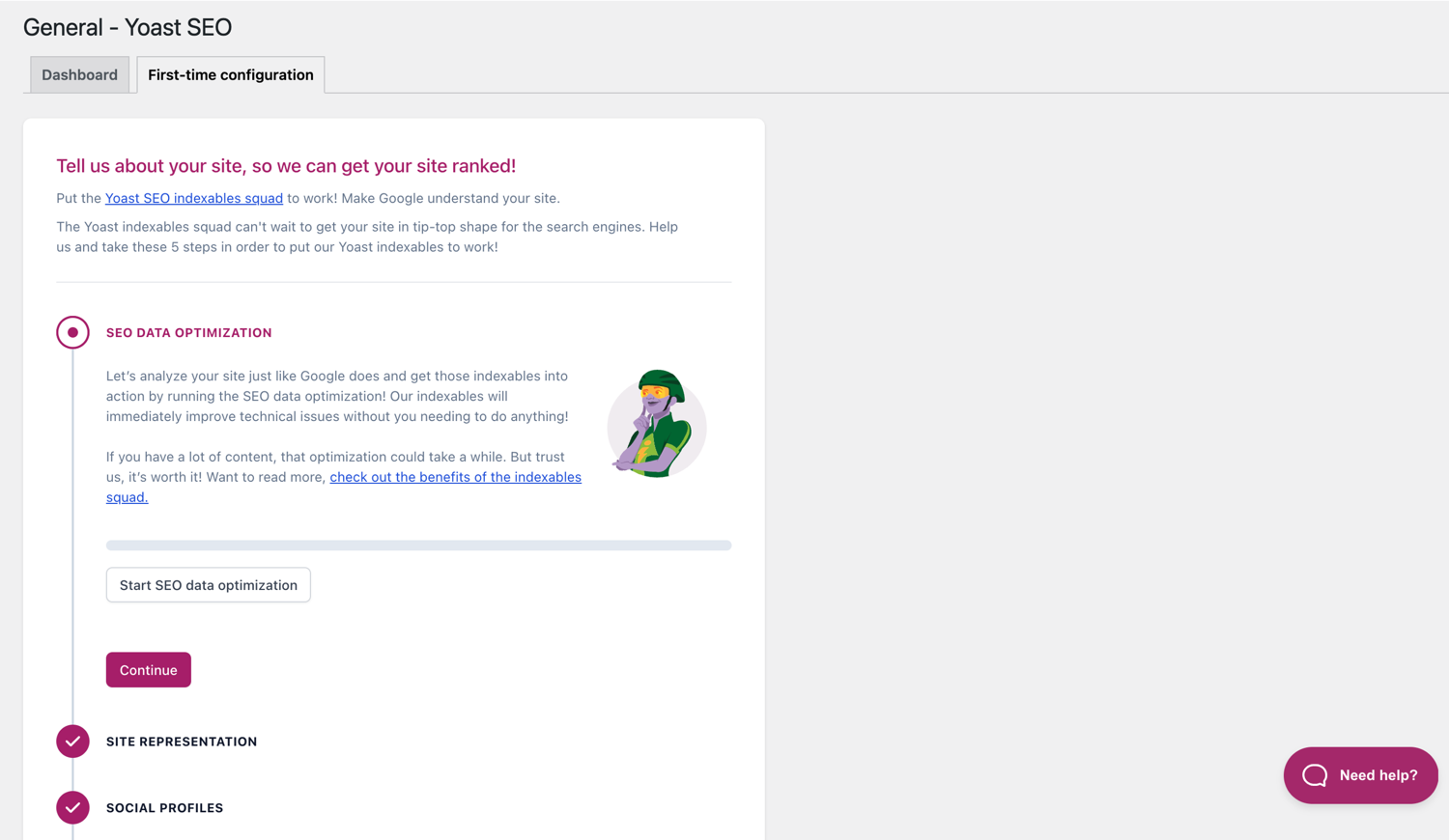
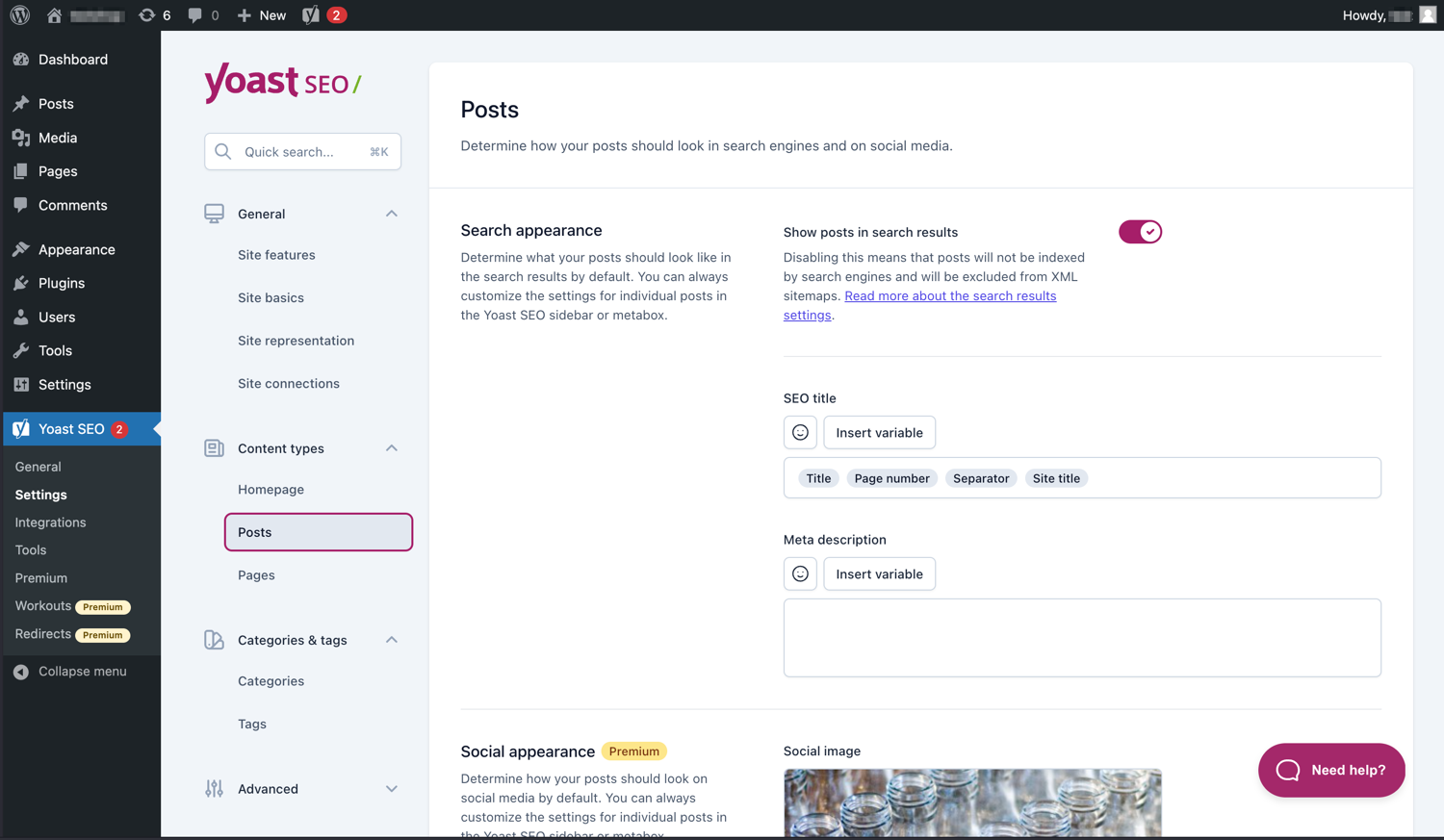
Yoast walks you through a first-time configuration: it asks whether your site is a business or a personal blog, whether you are a company or a person, and fills in the basics for Google. The steps are short and the defaults are sensible — most sites are done in ten minutes and never touch the settings again.
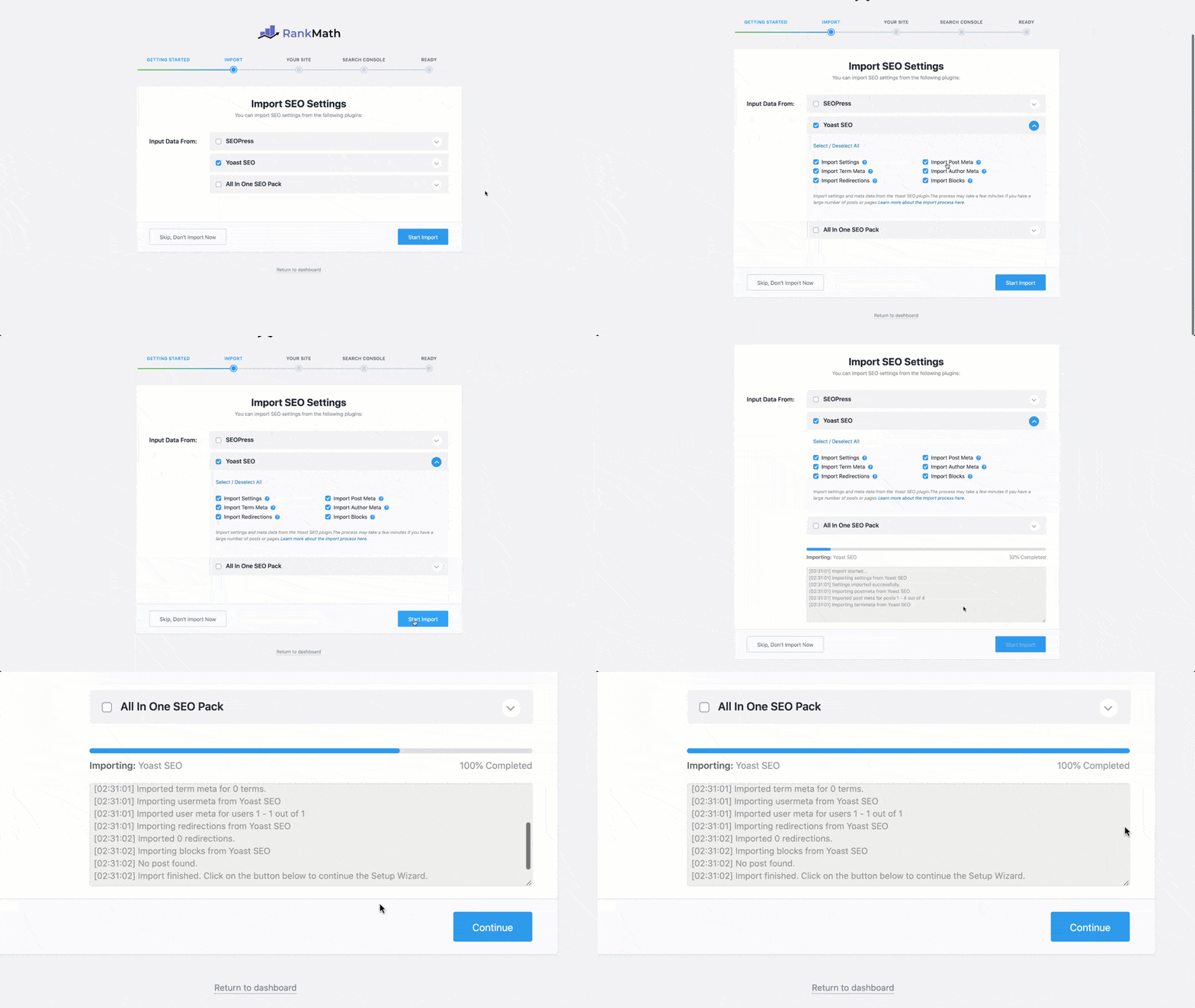
Rank Math runs a proper setup wizard with a compatibility check and pre-selected optimal settings — a longer process, but it finishes with more configured: sitemaps on, Search Console connected, analytics wired up. Its killer trick is the one-click importer: if you already run Yoast, All in One SEO or SEOPress, Rank Math copies over your titles, meta descriptions and settings, so switching does not mean redoing everything.
✍️ Content analysis: the core job
This is where both plugins earn their keep, and where they feel completely different.
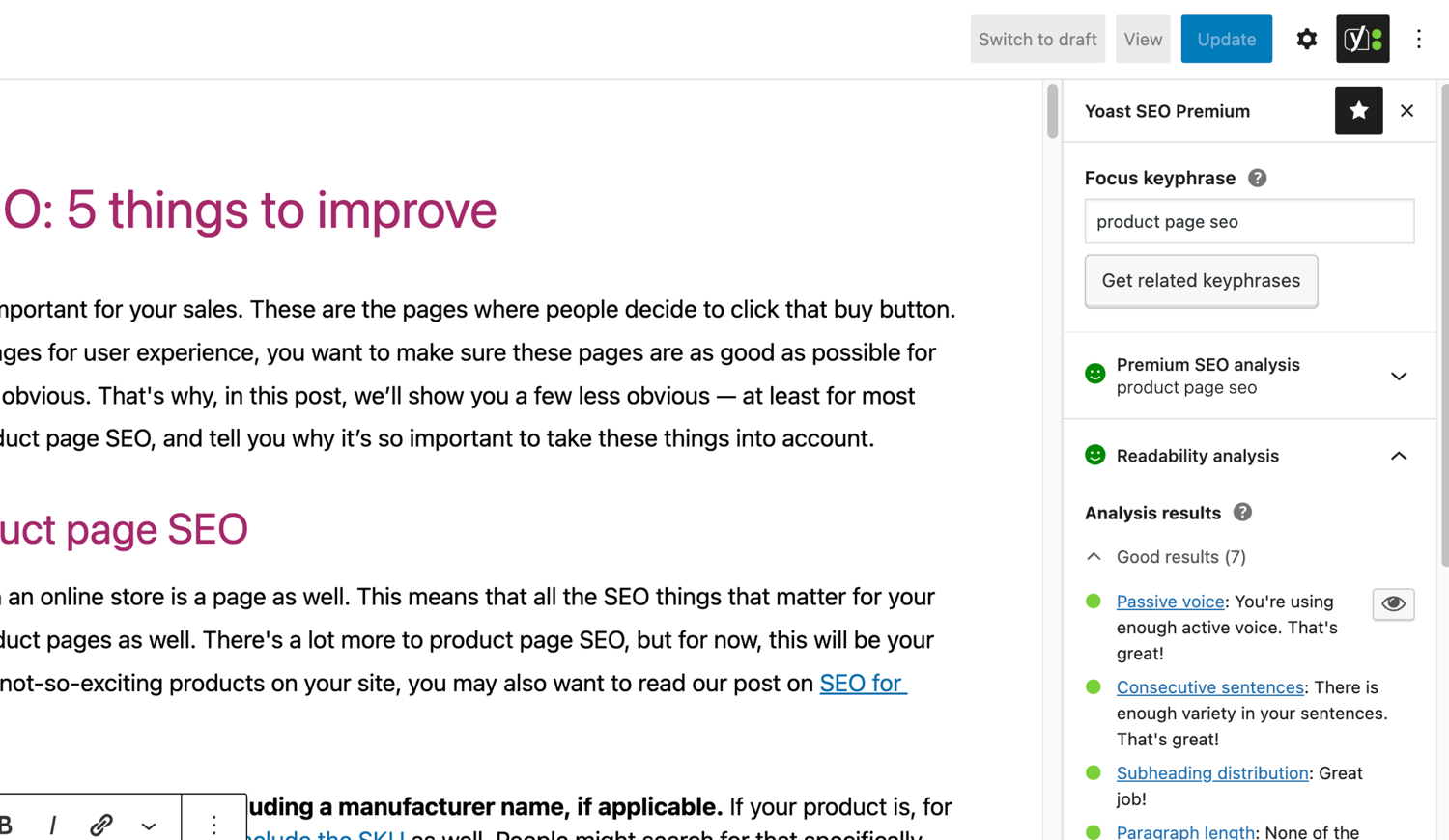
Yoast's traffic-light analysis is still the best writing coach in WordPress. You type a focus keyword, and the plugin grades your post: green for good, orange for improvable, red for a problem. It checks whether your keyword is in the title, the first paragraph and the headings; whether sentences are too long; whether paragraphs are readable; whether you used transition words. It even checks inclusive language — flagging wording that may read as non-inclusive, a feature no competitor matches. The analysis has real teeth: it is written by linguists and SEO engineers, and it teaches you to write better over time.
Rank Math takes a different approach: instead of one keyword, you can add unlimited focus keywords — even on the free plan — and the plugin scores your post 0–100 against more than 30 tests. The checklist style shows exactly which tests pass and fail. Where Rank Math pulls ahead is AI: its Content AI module suggests keywords, writes outlines and drafts, and scores your content against competitors — though it works on a credit system and is a separate subscription beyond the 15-day trial included with paid plans.
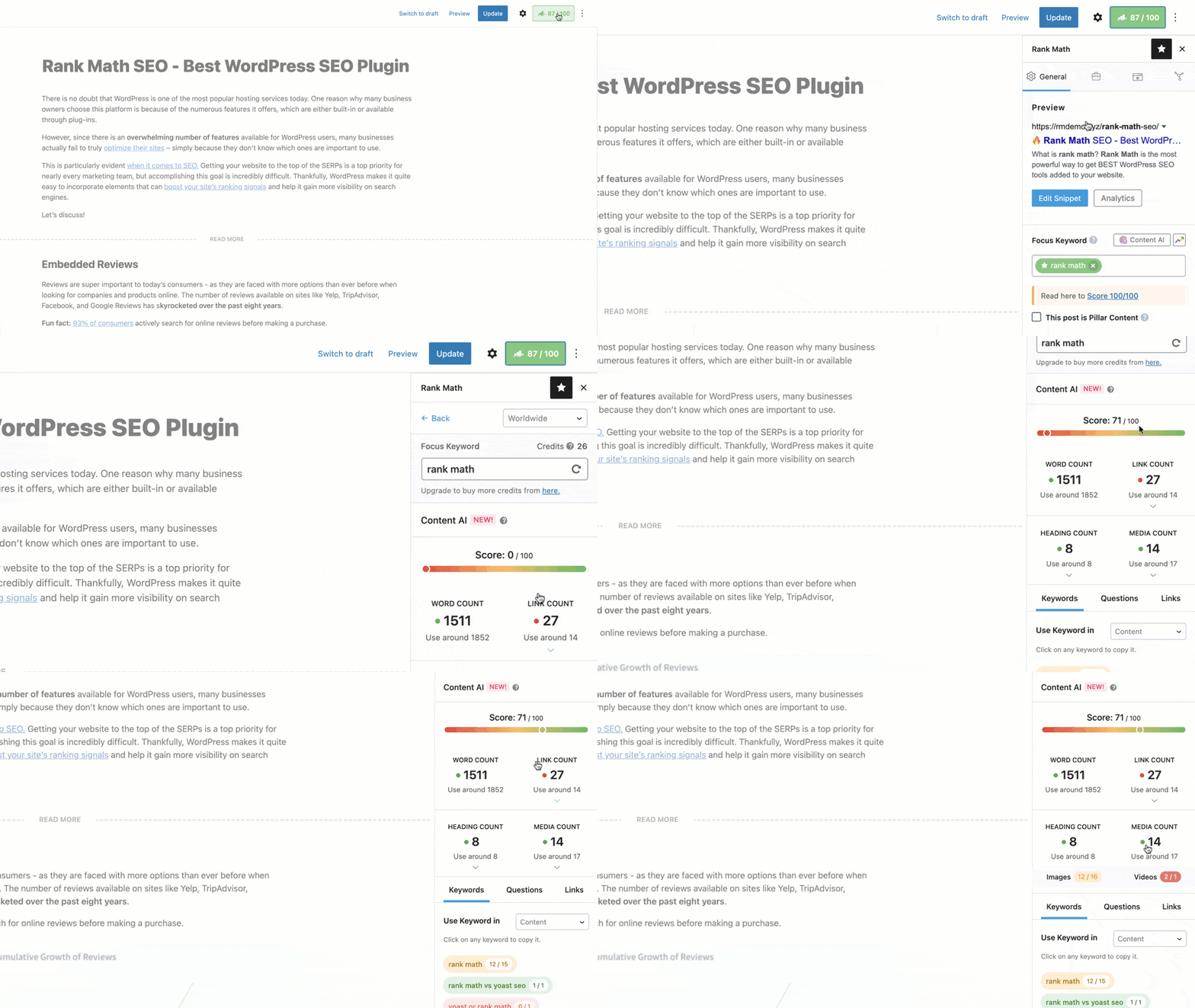
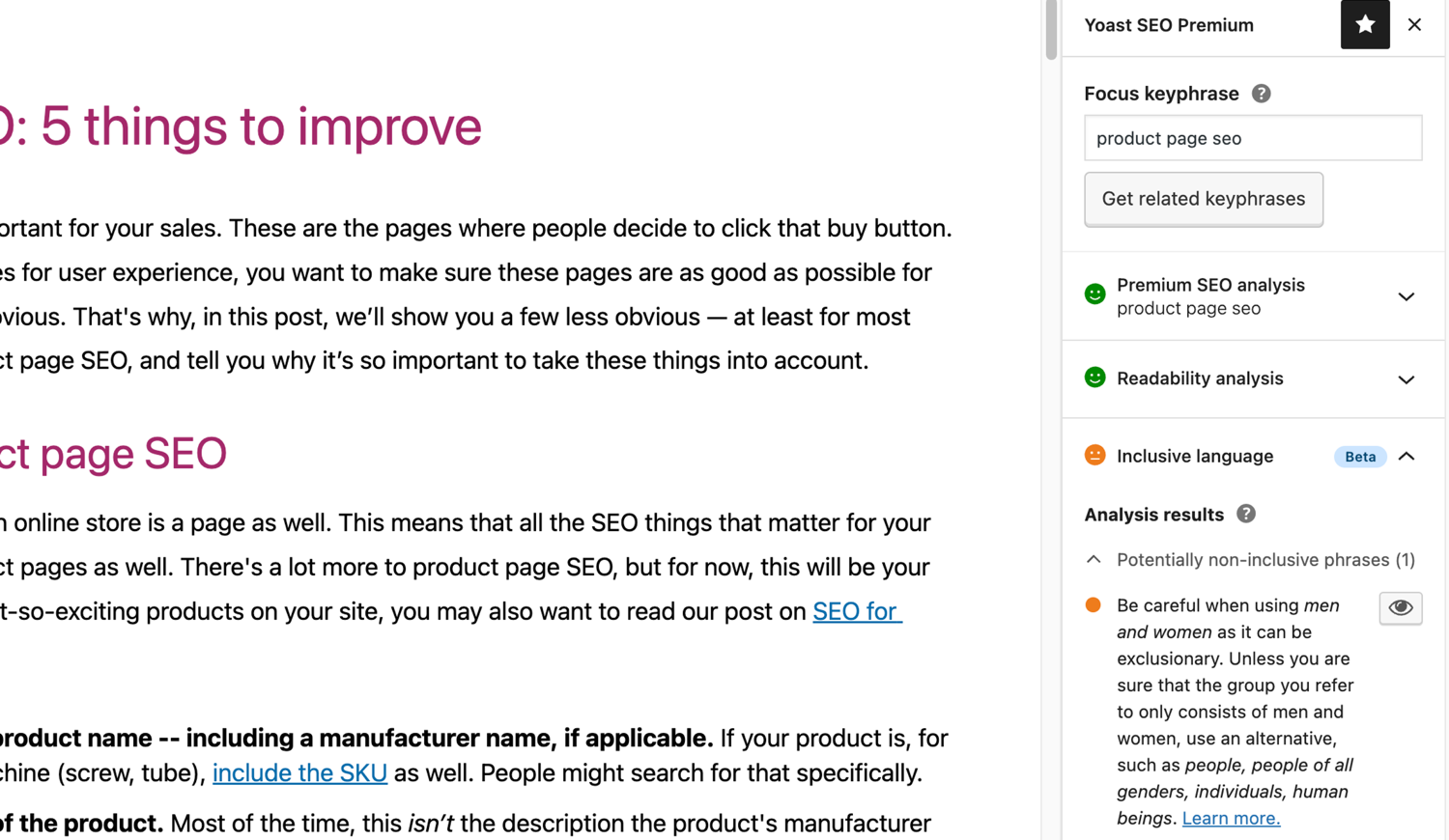
🖼️ Google preview and schema
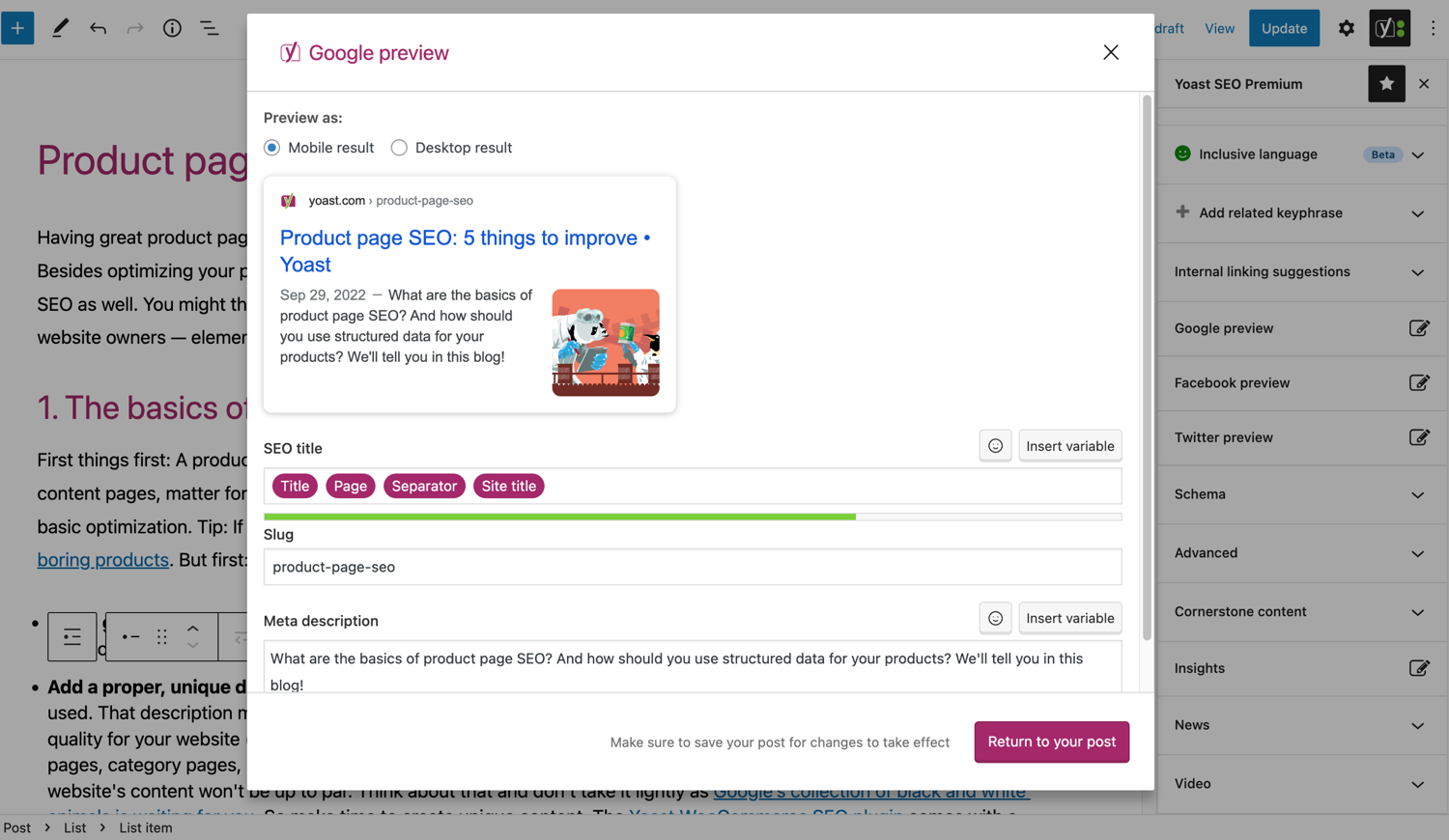
Both plugins show how your page will look in Google before you publish: the title, the web address and the description. Yoast's snippet preview is the cleaner one — it renders your result as a real Google listing, mobile and desktop side by side, and warns you when the title will be cut off.
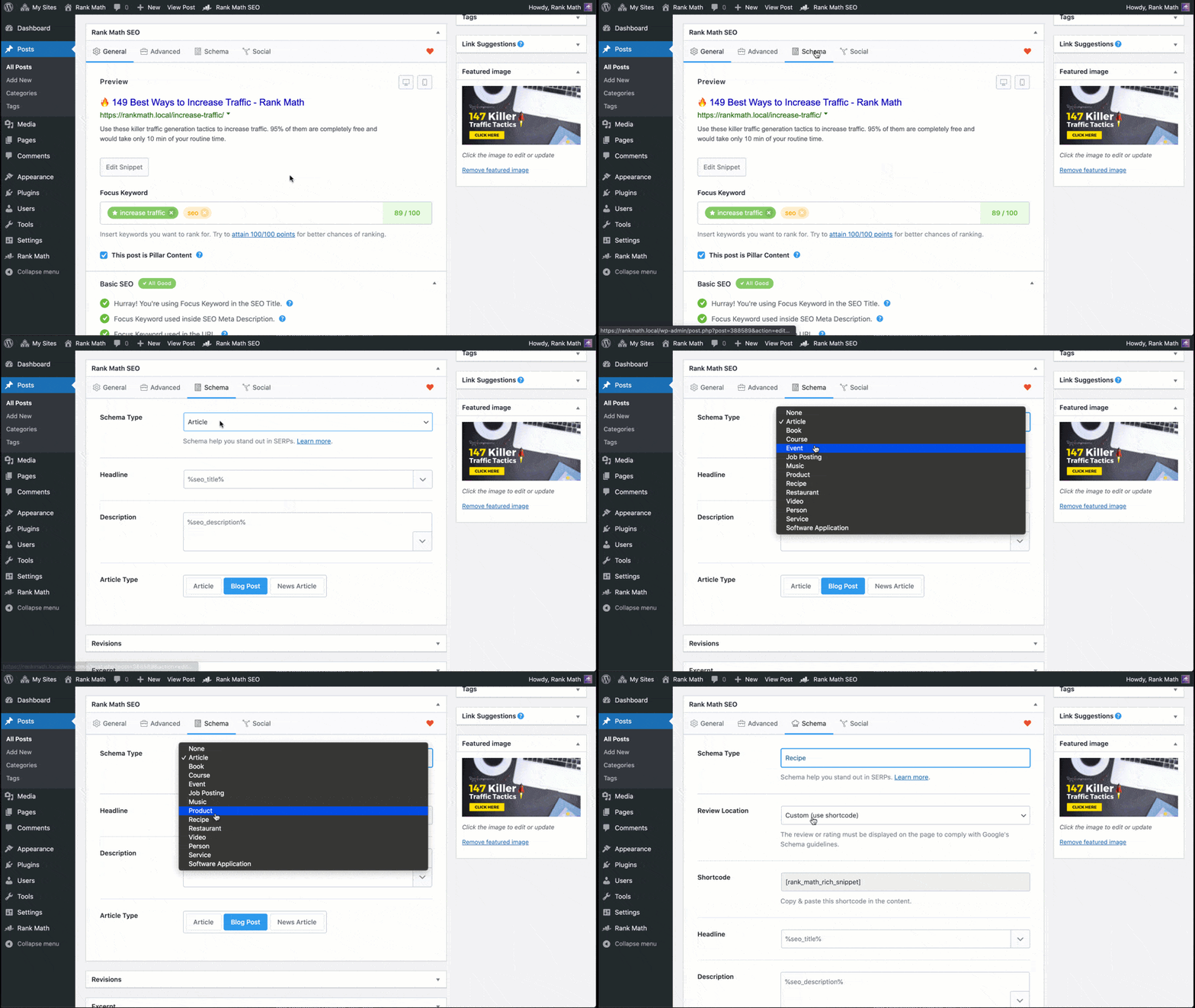
Schemas — the hidden labels that win star ratings, recipe cards and FAQ boxes in search results — are another story. Yoast sets up solid default schema for articles and organizations automatically, and you can add FAQ and HowTo blocks by hand. Rank Math turns schema into a playground: 18 built-in types on the free plan (articles, recipes, events, jobs, products and more), automatic FAQ schema from page builders, and a visual schema builder with 840+ types on paid plans — you can even copy schema from any competitor's page and validate it against Google.
🆓 What you get for $0
This is the sharpest difference between the two plugins. Yoast's free version covers the writing essentials and stops there. Rank Math's free version includes whole modules that Yoast sells in Premium. Here is the honest checklist:
| Feature | Yoast Free | Rank Math Free |
|---|---|---|
| Content + readability analysis | ✅ | ✅ |
| Google preview (search snippet) | ✅ | ✅ |
| XML sitemaps | ✅ | ✅ |
| llms.txt generator for AI crawlers | ✅ | ✅ |
| Focus keywords per post | 1 | Unlimited |
| Redirect manager | ❌ Premium | ✅ |
| 404 monitor | ❌ Premium | ✅ |
| Local SEO (structured data) | ❌ Premium | ✅ |
| Google News sitemap | ❌ Premium | ✅ |
| Video SEO sitemap | ❌ Premium | ✅ |
| Role manager (who sees what) | ❌ Premium | ✅ |
| Google Search Console + GA4 inside WordPress | ❌ (use Site Kit) | ✅ |
| Internal linking suggestions | ❌ Premium | ✅ (basic) |
| Built-in schema types | Basics | 18+ |
The free-plan logic matters most for bloggers and small sites: with Rank Math you may never need to pay at all. Yoast's free version is honest but minimal — it assumes the Premium upgrade is coming.
💰 Pricing: what you pay, and what it costs over 3 years
Yoast restructured its whole price list in July 2025. The old maze of ten add-ons is gone; there are now two subscriptions. Yoast SEO Premium ($118.80/yr per site) bundles everything the old add-ons did — Local SEO, News SEO, Video SEO — plus the redirect manager, internal linking, AI title generation, crawl settings and a Google Docs add-on seat. Yoast WooCommerce SEO ($178.80/yr) adds product-specific analysis and schema on top. The catch: every license covers one site.
Rank Math prices per account, not per site. PRO (€7.99/month, billed annually — renews at €8.99) covers unlimited personal websites, adds the rank tracker for 500 keywords, Google News and Video sitemaps pro features, image SEO and white-label-free reports. Business (€24.99/mo) covers 100 client sites with 10,000 tracked keywords; Agency (€54.99/mo) covers 500 sites and 50,000 keywords. All plans include a 30-day money-back guarantee, and Content AI remains a separate credit-based product with a free trial.
🛠️ Technical SEO: redirects, sitemaps, 404s
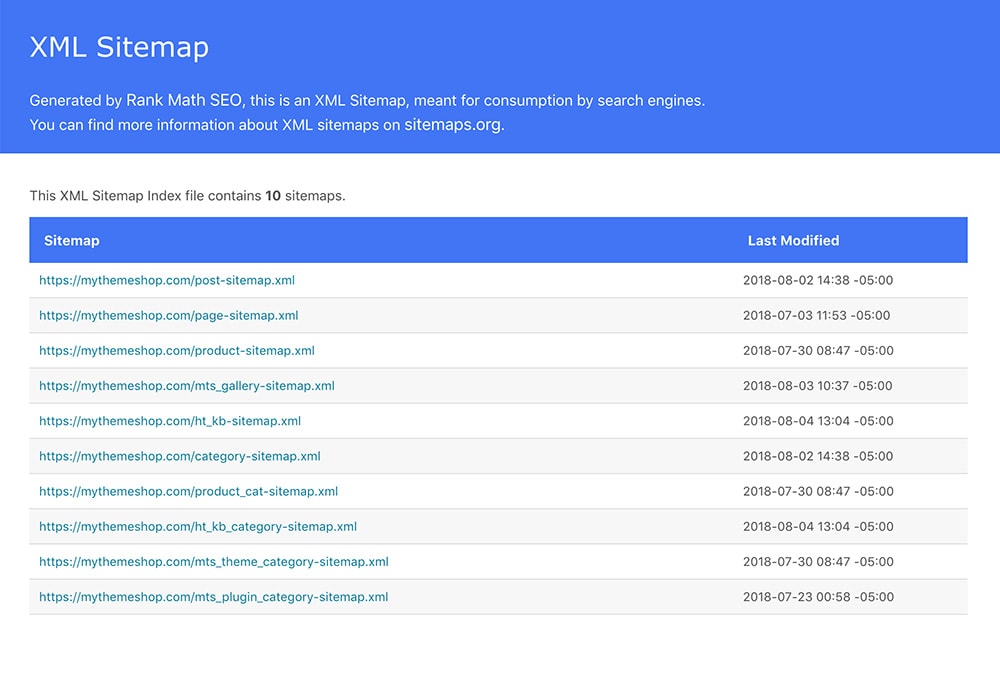
Both plugins generate XML sitemaps, manage breadcrumbs, edit robots.txt and ship the new llms.txt file for AI crawlers. The differences sit in the plumbing.
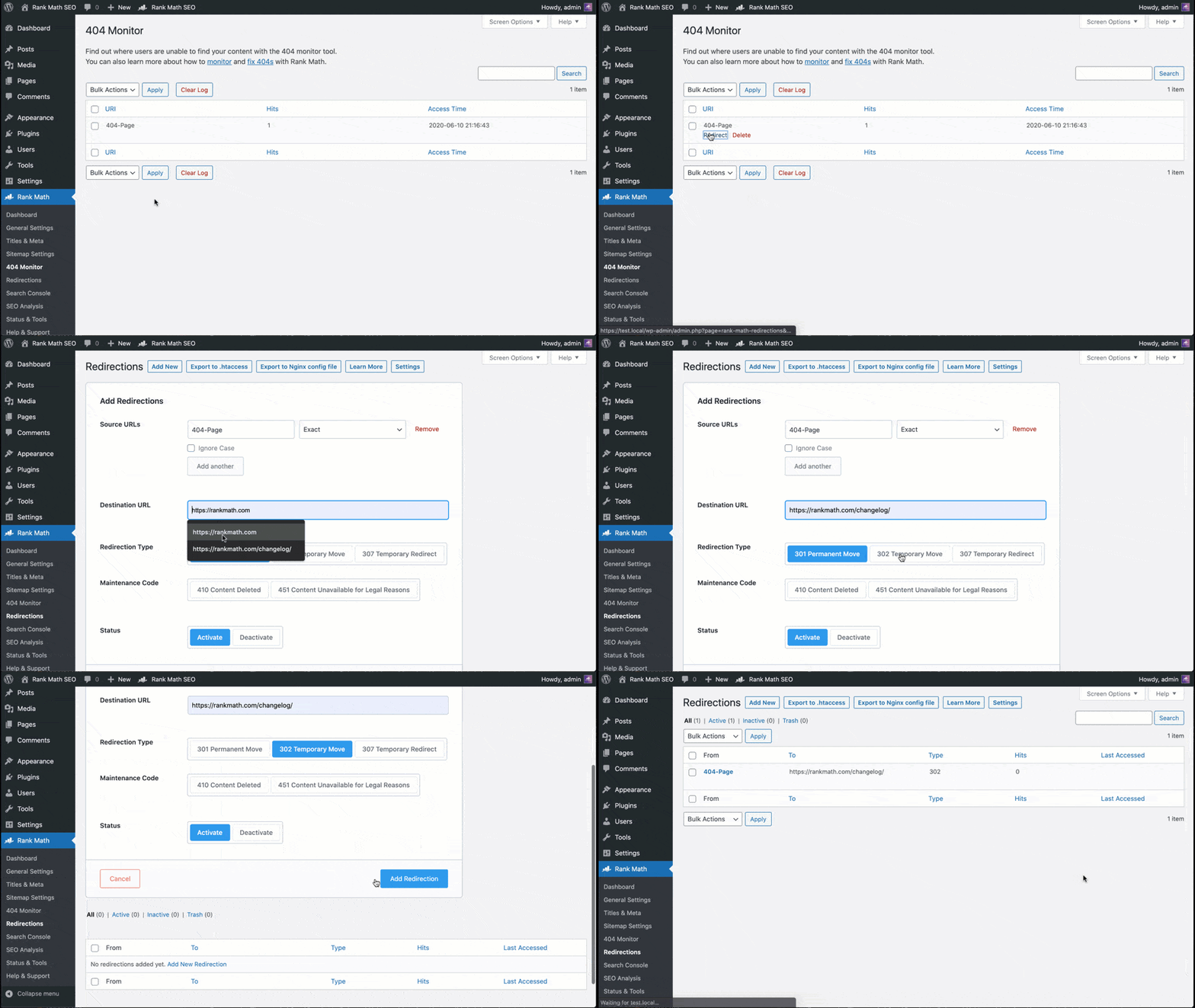
Redirects: Yoast's redirect manager is Premium-only, but it is the smarter one — it suggests redirects automatically when you change a URL or delete a post. Rank Math's redirect manager is free and covers 301, 302, 307, 410 and regex rules, syncing to .htaccess on paid plans. 404 monitoring: Rank Math watches broken links and logs dead pages for free; Yoast has no equivalent in the free version.
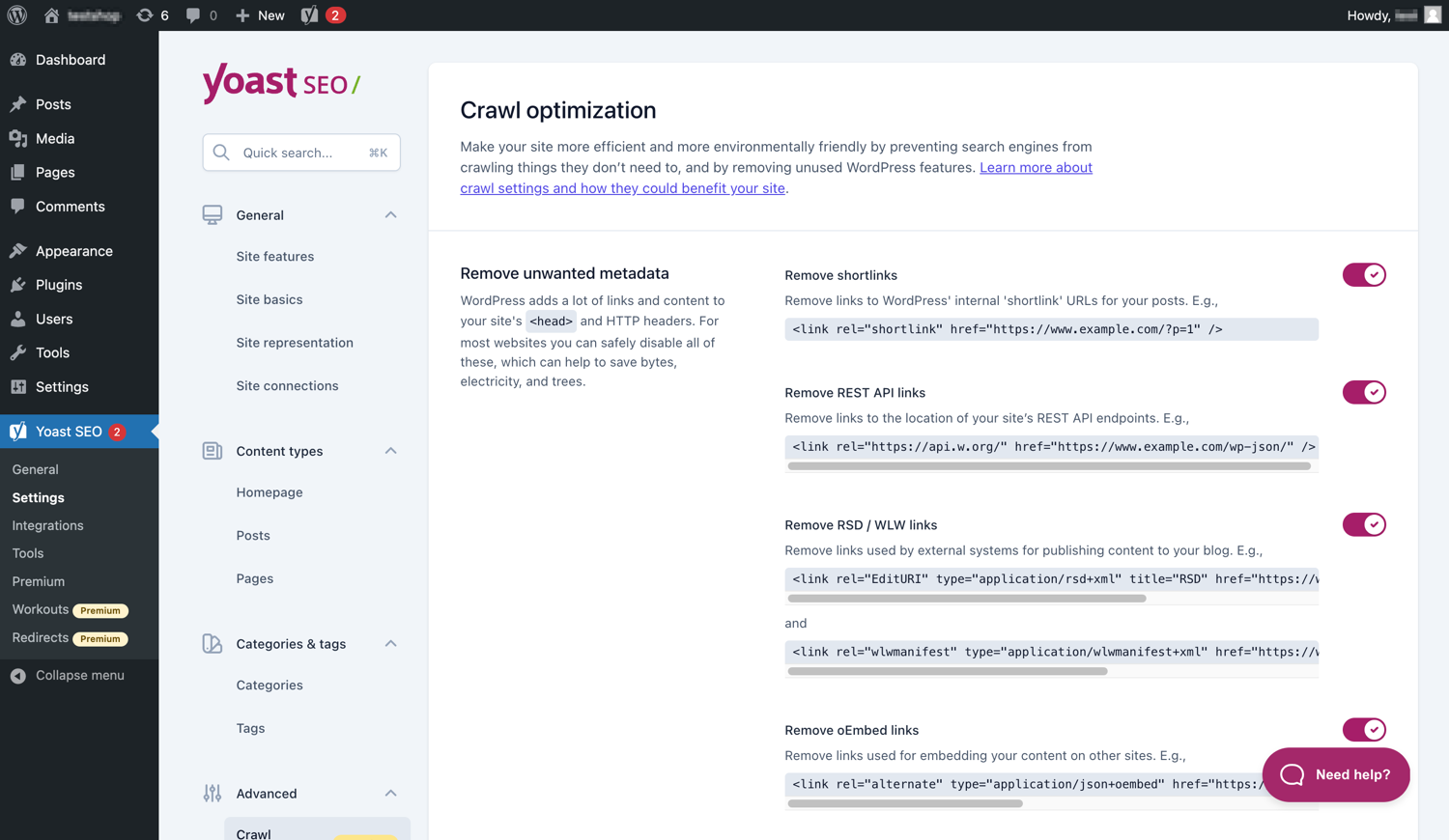
Crawl cleanup: Yoast Premium can strip the RSS feeds, date archives and pagination clutter that waste Google's attention on big sites — a feature Rank Math answers with its robots.txt editor and noindex controls. Performance plumbing: both keep the public-facing site light (they output meta tags and schema; nothing heavy loads for visitors), but Rank Math's modular design lets you switch off anything you do not use, while Yoast loads as one integrated plugin.
🤝 Support, docs and trust
Yoast has the deepest safety net: 24/7 email support for paid users, developer documentation on a dedicated site, and the Yoast SEO Academy — full video courses that teach SEO from scratch, free with Premium. The plugin has 15 years of stability, 10 million installs and one of the largest review bases on WordPress.org (27,819 reviews, 4.8 stars). Yoast is owned by Newfold Digital, the company behind Web.com and Bluehost — big-company resources, big-company pace.
Rank Math offers 24/7 support from the PRO plan up, a large knowledge base and fast plugin updates — it shipped its latest release a week before Yoast's at the time of writing. Its support threads on WordPress.org resolve at 89%, a whisker above Yoast's 88%. The honest caution flag: Rank Math had one serious security incident in December 2023, a stored XSS hole exploited in the wild, patched within days in version 3.0.94. Since then its record has been clean — but Yoast has never had an incident of that scale, and its 27,819 reviews versus Rank Math's 7,501 reflect a much longer runway of public trust.
✅ 27,819 public reviews at 4.8★
✅ SEO Academy + best-in-class docs
✅ No major security incidents
⚠️ Per-site pricing, Newfold ownership
✅ 7,501 public reviews at 4.8★
✅ Fast updates, 89% resolved support
✅ 30-day money-back on all plans
⚠️ One exploited XSS incident (Dec 2023, patched)
🎯 Which plugin should you pick? Four scenarios
❓ Frequently asked questions
🔎 Final verdict
Comments
One edge case worth adding about Rank Math on shared hosting: on a client site with roughly 30,000 posts, the analytics module (Search Console sync) made the admin dashboard noticeably sluggish until we limited the data fetch frequency and preserved-days settings. The frontend was fine — it is purely an admin-area issue. On normal-sized sites this never shows up, but if you run a large archive on cheap hosting, tune those two settings right after activating the module.
Question about Content AI for the author wondering about AI features: is the credit system workable for a solo blogger, or does it push you toward a bigger plan quickly? I like that Rank Math includes a 15-day trial on PRO, but I cannot find a clear answer on how many credits a typical "write an outline plus a meta description per week" workflow actually burns. Yoast's bundled AI (titles and descriptions) looks cheaper for that narrow use case, even at $118.80/year.
The per-site detail in the pricing section is the thing most comparisons miss. We publish three niche magazines on separate domains and were quoted by Yoast — Premium for each site. With Rank Math PRO that is one subscription covering all three plus our two sister blogs. Before committing I checked the fine print: unlimited personal websites, client sites excluded. For a small publisher that distinction matters, so read the license terms before buying either way.
Practical question for anyone who has done the migration: the Rank Math importer copies titles and meta descriptions, but what happens to redirects created in Yoast Premium? We manage around 40 client sites and most have hundreds of legacy redirects. Does the import cover them, or do we need to export the redirect table separately and bring it in via CSV? We can tolerate redoing schema, but silently losing 301s on client domains would be a disaster.